Application Case of Smart Streetlight Project in an Industrial Park in Qinghai Province

With an average elevation of over 3,000 meters and annual sunshine duration of 2,500–3,600 hours, Qinghai is one of China’s most solar‑rich regions. However, harsh conditions such as extreme cold, low air pressure, intense ultraviolet radiation, and insufficient grid coverage have long constrained the intelligent upgrade of industrial park infrastructure. How to achieve low‑carbon operation and smart management while ensuring reliable lighting?

In 2023, a national‑level green industrial demonstration park in Qinghai Province launched a smart lighting retrofit project, fully introducing a high‑altitude‑adapted smart streetlight system custom‑developed by Hangzhou Sanqian Smart City Technology Co., Ltd. This project not only overcame extreme environmental challenges but also became a benchmark for smart park construction on the Qinghai‑Tibet Plateau.

I. Project Background: Lighting Dilemmas and Transformation Opportunities in a High‑Altitude Park

Located on the outskirts of Xining, the park covers approximately 4.2 km² and hosts enterprises in new energy, biomedicine, high‑end manufacturing, and other fields. The original lighting system relied on grid power and suffered from three major problems: (1) some newly built roads had no power supply, and temporary cabling was expensive; (2) traditional high‑pressure sodium lamps had high energy consumption, short lifespans, and difficulty starting in low winter temperatures; and (3) the lack of remote monitoring resulted in delayed fault response, affecting nighttime production and security.

As Qinghai’s “Clean Energy Demonstration Province” strategy advanced, the park management committee set clear upgrade goals: “zero‑carbon lighting, smart O&M, and landscape harmony.” Consequently, the project selected a fully solar‑powered smart streetlight solution with remote dimming and energy consumption statistics. In the first phase, 96 poles (6 m high) were deployed, covering main roads, logistics corridors, and employee living areas.

II. Product Design: Deeply Optimized for Plateau Environments

In response to Qinghai’s severe cold (winter lows of -28°C), strong UV radiation, large daily temperature swings, and thin air, Hangzhou Sanqian Smart City Technology Co., Ltd. made systematic adaptive designs:

  1. Battery and thermal control system: Military‑grade lithium iron phosphate battery packs with built‑in intelligent heating modules, ensuring normal charging/discharging down to -30°C. The battery compartment uses phase‑change material insulation to reduce heat exchange loss.

  2. High‑efficiency PV modules: Anti‑PID monocrystalline silicon panels with anti‑UV coating on the surface; annual degradation rate controlled within 1.5%.

  3. Structural reliability: Pole wall thickness ≥ 3.5 mm, passed wind resistance test up to level 12 (wind pressure 1.0 kN/m²). All fasteners are 316 stainless steel to resist plateau salt‑alkali corrosion.

  4. Intelligent control system: Equipped with the self‑developed “Huiguang” platform, supporting light‑sensing + time‑control dual modes, holiday lighting strategies, remote fault diagnosis, and real‑time energy consumption data upload. Communication uses NB‑IoT + LoRa dual‑mode redundancy to ensure signal stability.

Additionally, the lamp body features a light‑gray stone‑like spray coating that harmonizes with the park’s modern industrial style, avoiding a “technologically obtrusive” appearance.

III. Operational Results and User Feedback

The project was completed and put into operation in November 2023. By the end of 2024, the system had run continuously for more than 13 months, withstanding two extreme cold spells (-26°C) without any low‑temperature power failure or control malfunction. Key operational data:

  1. Average daily power generation: 1.8 kWh per pole, meeting the need for 10 hours of full brightness (60W LED module).

  2. Continuous operation for 7 days in cloudy/rainy/snowy weather, far exceeding design expectations.

  3. The remote platform triggered 12 low‑battery warnings and 3 communication failure alarms, all resolved within 24 hours by remote reset or on‑site intervention.

The park’s property manager said: “In the past, when the lights went out at midnight in winter, we had to send someone to drive around and check. Now we can see on our phones which light is faulty – efficiency has improved enormously.” Employees generally reported: “The light is evenly distributed, with no flicker, so we feel safer when working late.”

IV. Economic and Social Benefits

Economic benefits:

  1. Eliminated cable installation costs of about 850,000 RMB.

  2. Saved about 62,000 RMB per year in electricity costs (based on the park’s commercial rate of 0.85 RMB/kWh).

  3. Expected payback period of 4.8 years for incremental investment; total cost over a 10‑year life cycle is 52% lower than grid‑connected streetlights.

Social benefits:

  1. Reduced annual carbon emissions by about 50 tons, supporting the park’s application for “Near‑Zero Carbon Demonstration Unit” status.

  2. Improved nighttime safety: nighttime safety incidents in the park fell by 37% year‑on‑year.

  3. Established a replicable technical path for high‑altitude smart lighting, already included in the 2025 construction plans of two other industrial parks in the province.

Conclusion: Transforming Plateau Sunshine into Sustainable Urban Service Capability

The successful implementation of the Qinghai park project not only validates the technical feasibility of smart solar streetlights in extreme environments but also highlights their strategic value in promoting green manufacturing and improving park governance. Truly smart infrastructure is not about showing off technology; it is about being reliable under harsh conditions, continuously reducing costs over long‑term operation, and earning trust through thoughtful service details.

With its deep understanding of high‑altitude, severe‑cold scenarios and full‑chain independent R&D capabilities, Hangzhou Sanqian Smart City Technology Co., Ltd. has become a trusted partner for smart park construction in western China.

If you are planning a similar project or need customized smart streetlight solutions for plateaus, deserts, or remote areas, we invite you to have an in‑depth conversation with Sanqian Intelligence. Because on this land closest to the sun, every ray of light deserves to be used wisely.

Contact Information

Hangzhou Sanqian Smart City Technology Co., Ltd.
Address: Tangqi Industrial Park, Linping District, Hangzhou, China
Tel: 0571-86099600 +86 15606816991
Email: hzsqzhcs@163.com
Share:

Recommended Products

  • Smart solar bench

    ¥69.00

    Product Name: Solar-Powered Multi-Function Smart Bench

    Application Scenarios: Suitable for public places such as scenic areas, tourist resorts, amusement parks, zoos, botanical gardens, schools, parks, residential communities, etc.

    Main Functions: Provides a 5G interface, allowing citizens to experience AI voice dialogue functions on the smart bench in public spaces. Also offers mobile phone charging, WiFi, Bluetooth music playback, and other functions (functions can be customized; additional optional functions are available).

    Basic Introduction: The solar-powered multi-function smart bench uses clean solar energy as its power supply system. It also features various convenient smart functions such as wireless charging, Bluetooth module, WLAN, speakers, LED ambient lighting, etc., enabling users to enjoy the convenience and fashion of smart technology. This multi-function smart bench integrates trendy design elements, low-carbon environmental concepts, artificial intelligence operation, commercial operation models, landscape aesthetics, and leisure & entertainment functions.

  • Smart solar trash bin

    ¥69.00

    Product Name: Smart Solar Trash Bin

    Application Scenarios: Suitable for outdoor locations such as city streets, parks, scenic areas, campuses, and other places without grid power or requiring energy savings, enabling waste sorting and intelligent management.

    Function Configuration: Integrates solar power supply, sensor‑activated opening, voice prompts, overflow alerts, remote monitoring, supports sorted waste disposal and data uploading, no external power connection required.

    Product Overview: The smart solar trash bin is a new type of public facility that combines self‑sufficient energy with intelligent management. High‑efficiency monocrystalline silicon photovoltaic panels power the system, paired with energy storage batteries to ensure stable 24/7 operation. The device features core functions such as sensor‑operated automatic lid opening, voice‑guided waste sorting, and fill‑level monitoring. Via IoT technology, it enables remote data transmission and centralized control. The whole unit is made of waterproof and corrosion‑resistant materials, suitable for various outdoor environments, making it an ideal choice for promoting green, low‑carbon, and smart city development.

Related Articles

Hydrogen Sensor Industry Trends 2026: Technology, Applications and Market Outlook

Driven by global energy transition and hydrogen energy development, the global hydrogen sensor market is expanding rapidly, fueled by the growth of hydrogen refueling stations, energy storage plants and lithium battery factories.
Technological innovations such as nano-sensing and electrochemical detection have enhanced accuracy, anti-interference and stability. Intelligence and networking have become key trends, with standard communication interfaces enabling remote monitoring and automatic alarm.
Main applications cover hydrogen energy, energy storage, petrochemical and automotive industries. High-end products require explosion-proof and high-protection certifications to meet industrial safety standards.
The market will keep growing as hydrogen energy scales up, with sensors moving toward higher precision, intelligence and integration, supported by manufacturers with core technologies and complete certifications.

Fixed Hydrogen Concentration Detector: Complete Industrial Safety Guide

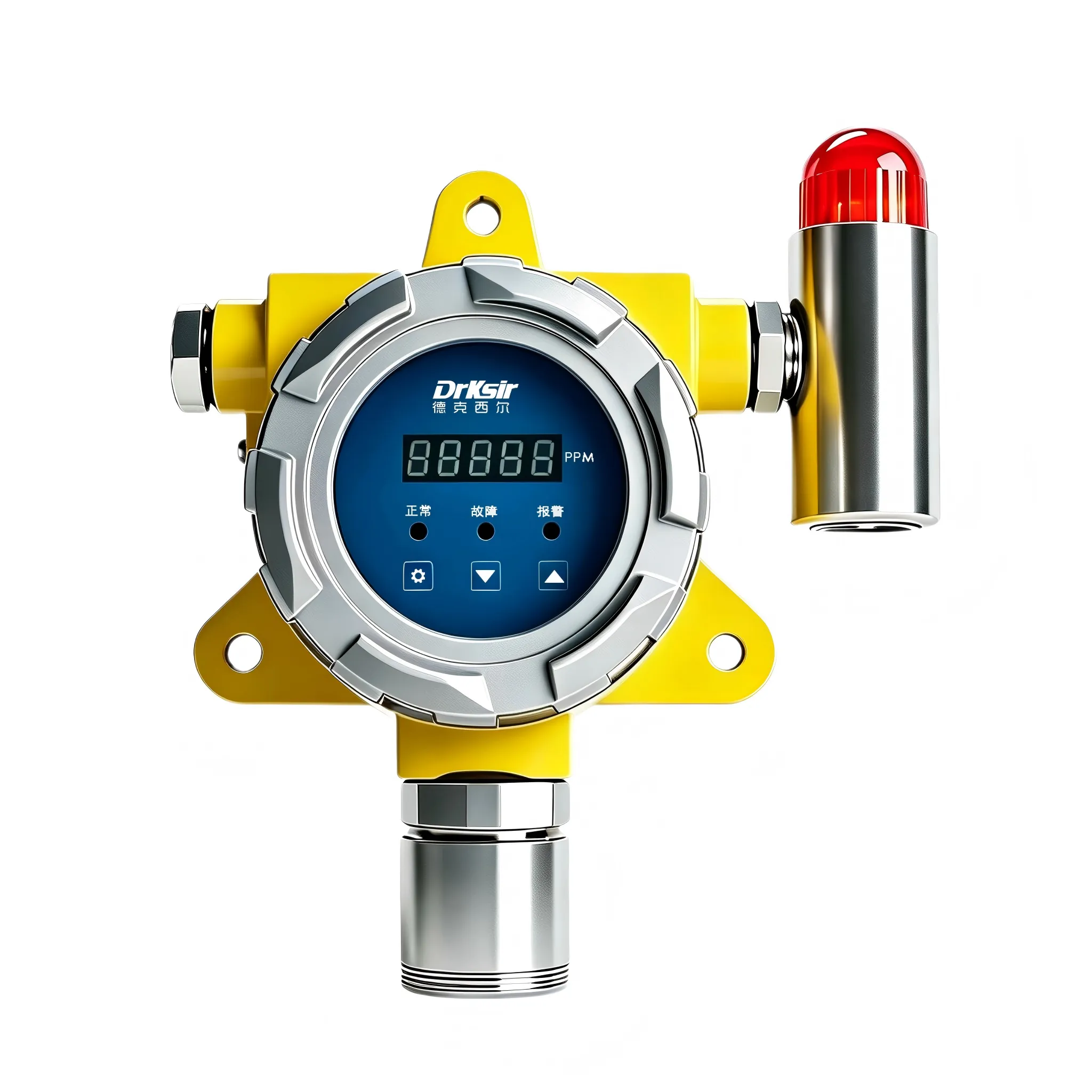
Hydrogen’s high flammability poses explosion risks for hydrogen stations, energy storage facilities and lithium battery factories, requiring reliable 24/7 gas monitoring. DrKSir’s fixed explosion-proof hydrogen detector adopts proprietary nano quantum sensing technology, delivering fast response, high precision and low false alarms while resisting complex industrial interference.
Featuring Ex db Ⅱ C T6 Gb explosion-proof certification and IP66 protection, it adapts to harsh environments. It supports four universal industrial signal outputs and flexible installation modes, enabling seamless integration with various control systems.
With intuitive local display, simple calibration, low power consumption and long service life, this low-maintenance detector suits hydrogen plants, battery workshops, petrochemical and laboratory scenarios. It offers stable long-term leakage early warnings and cost-effective industrial hydrogen safety solutions.

Key Notes for Inclination Sensor Installation and Practical Application

This article outlines key practical application guidelines for MEMS inclination sensors used in structural monitoring, mechanical control and new energy monitoring. Most on-site data drift, jitter and warning inaccuracies stem from improper operation rather than sensor defects.
It emphasizes standardized processes including scenario-based model selection matched for static or dynamic conditions, and professional installation with zero calibration. Standard shielded wiring reduces electromagnetic interference, while built-in temperature compensation controls data drift.
Reasonable filter parameter settings fit different monitoring scenarios, and regular maintenance ensures long-term data stability. Standardized full-process operation effectively guarantees high-precision, reliable monitoring for industrial and infrastructure safety systems.

Industry Trend: MEMS Inclinometer Sensors Empower Intelligent Bridge Health Monitoring

This article summarizes critical application specifications for industrial MEMS inclination sensors widely applied in infrastructure health monitoring, mechanical attitude control and new energy monitoring. Most common on-site issues including data drift, signal jitter and inaccurate early warnings result from non-standard usage instead of sensor quality faults.
It specifies standardized operation procedures covering scenario-adaptive model selection, professional installation and accurate zero calibration. Standard shielded wiring effectively avoids electromagnetic interference, while intelligent temperature compensation restrains temperature drift.
Matching filter parameters for static or dynamic scenarios and conducting regular maintenance further stabilize monitoring performance. Full-process standardized operations fully exert sensor precision, delivering stable, reliable and high-accuracy data support for industrial equipment and infrastructure safety monitoring systems.

Global Inclinometer Sensor Industry Trends 2026–2030: Precision, Intelligence & Global Supply Leadership

The global inclinometer sensor market is experiencing steady growth, expected to hit $3.59 billion by 2026, fueled by rising demands for structural health monitoring, renewable energy optimization and industrial automation. MEMS inclinometer sensors currently dominate the industrial sector, evolving toward higher precision, wireless IoT connectivity, edge AI processing and rugged environmental adaptability.
Widely deployed in infrastructure safety, new energy systems, engineering machinery and smart manufacturing, these sensors ensure stable, accurate and real-time tilt monitoring. The global market features diversified competition among international brands, with Chinese manufacturers gaining increasing recognition.
Drksir’s DK-INC series delivers industrial-grade accuracy, multi-protocol compatibility and strong anti-interference performance with reliable global supply and customized services. Moving forward, the industry will trend toward higher intelligence, lower power consumption and integrated IoT sensing solutions for global industrial digital upgrading.

Inclinometer Sensors: Principles, Applications, Selection Guide | Drksir DK-INC Series

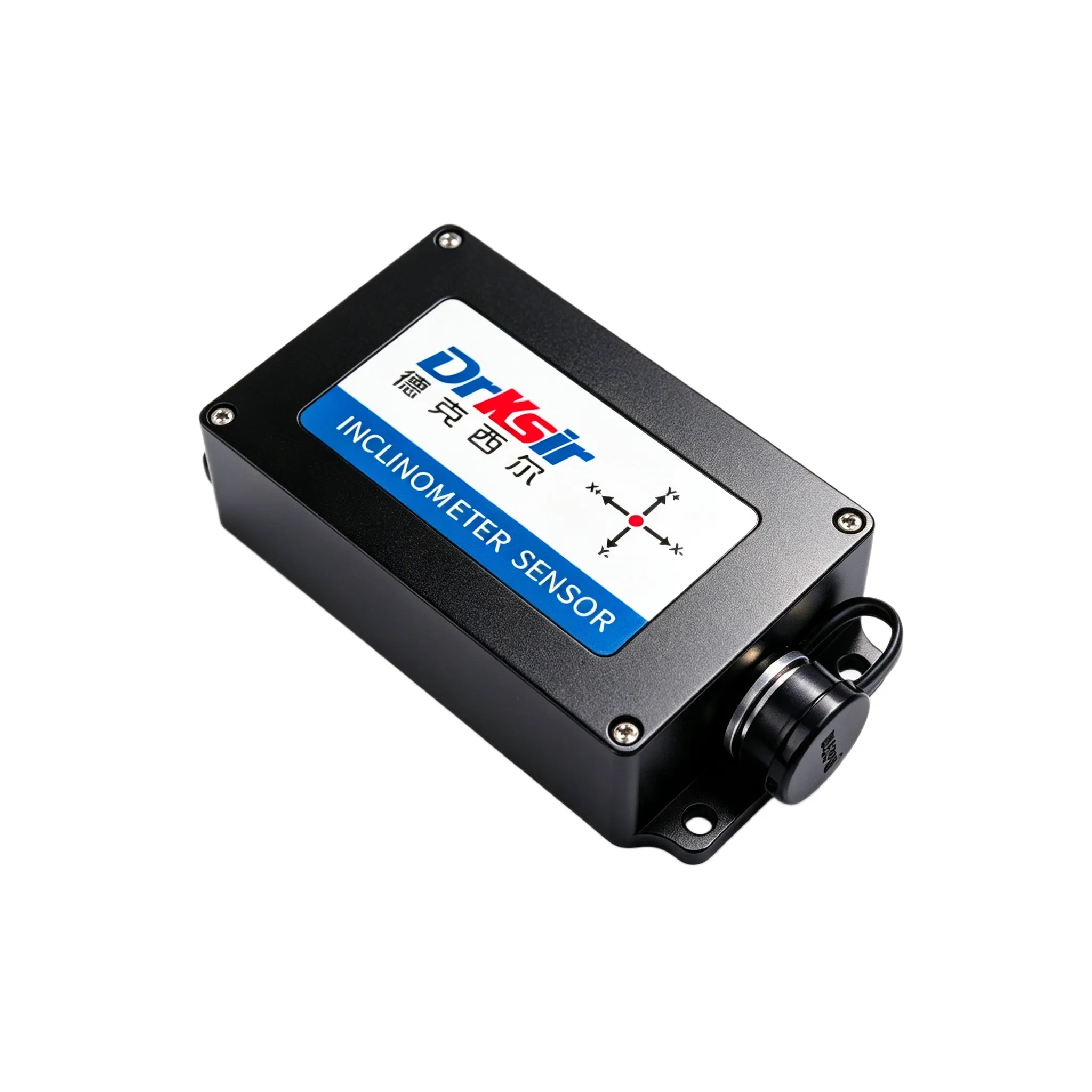
Industrial inclinometer sensors are key high-precision devices for attitude monitoring and structural safety early warning in industrial automation, infrastructure and intelligent equipment. Based on MEMS technology, they convert tiny tilt changes into digital signals with high accuracy and stability.
Drksir’s DK‑INC series features self-developed temperature compensation and noise reduction, delivering ultra‑low drift, strong anti‑interference and wide environmental adaptability. With multiple output interfaces and flexible installation, they are widely used in bridge monitoring, engineering machinery, new energy and cultural relic protection.
The industry is moving toward multi‑sensor fusion, edge AI and low power consumption. As a professional global supplier, Drksir offers static/dynamic models, full customization, industrial‑grade durability and plug‑and‑play convenience, providing reliable tilt sensing solutions for global industrial customers.

Industrial MEMS Inclinometer Sensor: Types, Applications and Selection Guide | Drksir Sensing

Drksir Sensing is a professional manufacturer integrating R&D, production and sales of MEMS inclinometer and accelerometer sensors. With standardized production, independent algorithms and strict quality control, it ensures stable performance and fast delivery.
Its full product line includes high-precision inclinometers and accelerometers supporting multiple interfaces, suitable for infrastructure, machinery, new energy and industrial automation.
Key selection criteria cover accuracy, stability, environmental adaptability and protocol compatibility. Drksir offers customized solutions, strong anti-interference design and global supply capacity.
As a reliable global supplier, it provides one-stop sensing solutions with stable quality, fast delivery and professional technical support for engineering and industrial projects worldwide.

x