The global inclinometer sensor market is projected to reach USD 3.59 billion by 2026, growing steadily at a CAGR of 5.06% until 2032. Driven by the booming demand for structural health monitoring, renewable energy operation optimization, industrial automation, and geotechnical safety construction worldwide, industrial inclinometer sensors are rapidly evolving from traditional single-function measuring components into intelligent IoT sensing terminals with high precision, strong stability, wireless connectivity, and edge computing capabilities.
At present, MEMS inclinometer sensors have become the mainstream solution in the global industrial field, widely used in infrastructure monitoring, new energy equipment, engineering machinery, intelligent manufacturing, and other high-standard industrial scenarios. As global industrial upgrading accelerates, higher requirements for sensor accuracy, temperature resistance, vibration resistance, data stability, and remote transmission have further promoted technological iteration and market concentration of industrial tilt sensors.
1. Core Technology Development of Global Industrial Inclinometer Sensors
1.1 MEMS Ultra-precision Measurement Technology
MEMS-based inclinometer sensors occupy more than 70% of the global industrial market share due to their compact structure, high stability, and cost advantages. Modern industrial-grade tilt sensors adopt advanced micro-electromechanical sensing units, combined with professional temperature compensation algorithms, achieving static accuracy up to ±0.005° and effectively solving measurement drift caused by extreme temperature changes. Through multi-sensor fusion of accelerometers and gyroscopes, plus Kalman filtering algorithm optimization, the dynamic measurement error is controlled within ±0.01°, fully adapting to high-frequency vibration and complex motion environments.
1.2 Wireless IoT and Intelligent Connection
With the popularization of industrial Internet of Things technology, wireless inclinometer sensors have gradually replaced traditional wired products. Mainstream communication methods such as LoRa, NB-IoT, and 4G enable long-distance, low-power, and stable data transmission. Wireless sensing solutions greatly reduce on-site wiring costs and construction difficulties, and are widely suitable for remote monitoring scenarios such as mountain slopes, transmission towers, and offshore wind power equipment.
1.3 Edge AI and Predictive Maintenance
Advanced industrial inclinometer sensors are equipped with embedded edge computing chips, which can realize real-time data filtering, abnormal data identification, and automatic threshold early warning locally. The intelligent sensing mode changes the traditional passive data collection mode, helping global enterprises realize predictive equipment maintenance, effectively reduce equipment failure rates, and extend the service life of industrial assets.
1.4 Industrial Ruggedization Design
Global industrial scenarios such as construction, mining, electric power, and marine engineering put forward extremely high environmental adaptability requirements for sensors. High-quality industrial inclinometer sensors support a wide temperature range of -40℃ to +85℃, with IP67/IP68 high waterproof and dustproof protection levels, as well as professional anti-vibration, anti-impact, and anti-EMI interference design, ensuring long-term stable operation in harsh industrial environments.
2. Main High-growth Application Scenarios in the Global Market
2.1 Structural Health Monitoring of Civil Infrastructure
Inclinometer sensors are core sensing devices for global structural health monitoring (SHM). They are widely installed on bridges, tunnels, dams, high-rise buildings, and retaining walls to collect real-time tiny tilt and settlement deformation data, helping engineering management teams judge structural health status, avoid hidden safety hazards, and realize intelligent infrastructure operation and maintenance.
2.2 Renewable Energy Intelligent Operation
In the global wind power and photovoltaic industry, precision tilt sensors play an irreplaceable role. Wind turbine tower inclinometers monitor tower deflection and vibration attitude in real time to optimize yaw control and reduce mechanical fatigue loss. Solar tracking inclinometers accurately adjust the angle of photovoltaic brackets to maximize solar energy utilization efficiency, helping new energy enterprises improve power generation benefits.
2.3 Engineering Machinery and Mining Safety Monitoring
Construction machinery such as cranes, excavators, and aerial work platforms relies on inclinometer sensors for real-time attitude monitoring and anti-rollover protection. In open-pit mines and tunnel construction, tilt sensors are used for slope stability monitoring and foundation deformation early warning, which greatly improves the safety level of global engineering construction.
2.4 Industrial Automation and Intelligent Equipment
In smart factories and automated production scenarios, inclinometer sensors provide high-precision level calibration and attitude control for AGV robots, automated processing equipment, and intelligent production lines, ensuring the stability and accuracy of automated equipment operation and promoting the intelligent upgrading of global manufacturing industry.
3. Global Market Competition and Development Pattern
The global inclinometer sensor market is mainly divided into high-end precision market and mass industrial market. European and American traditional brands have accumulated rich experience in high-precision laboratory and aerospace scenarios, while excellent Asian manufacturers have obvious advantages in industrial-grade cost performance, customized services, and rapid delivery.
In recent years, with the continuous breakthrough of domestic MEMS sensor technology and algorithm technology, high-quality Chinese industrial sensors have been rapidly recognized by global customers, and the market share of mid-to-high-end industrial scenarios continues to increase, forming a new market pattern of global multi-brand co-competition and complementary advantages.
4. Drksir DK-INC Series: Reliable Global Industrial Inclinometer Sensor Supplier
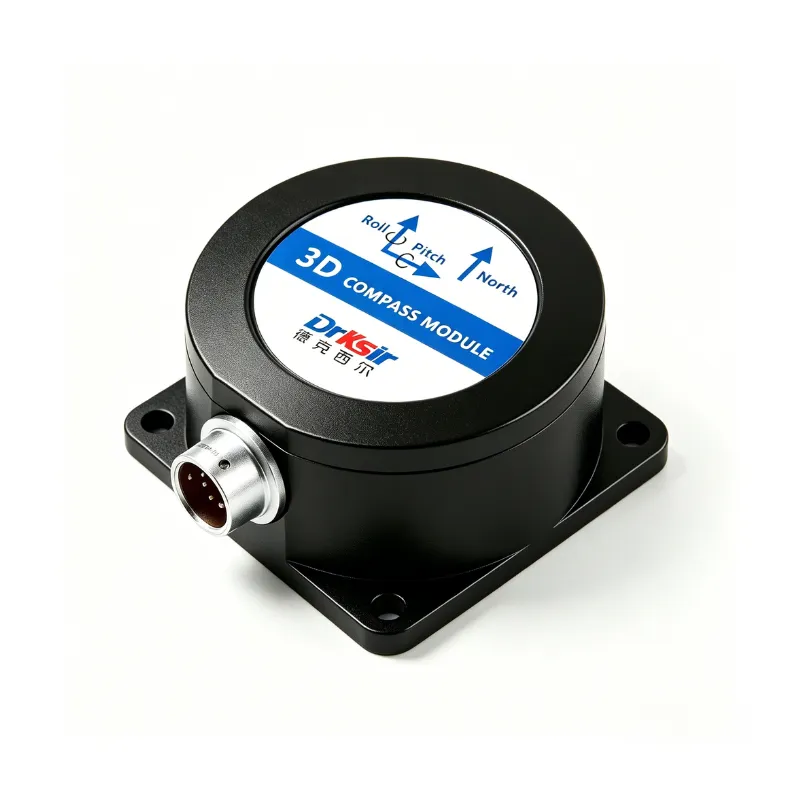
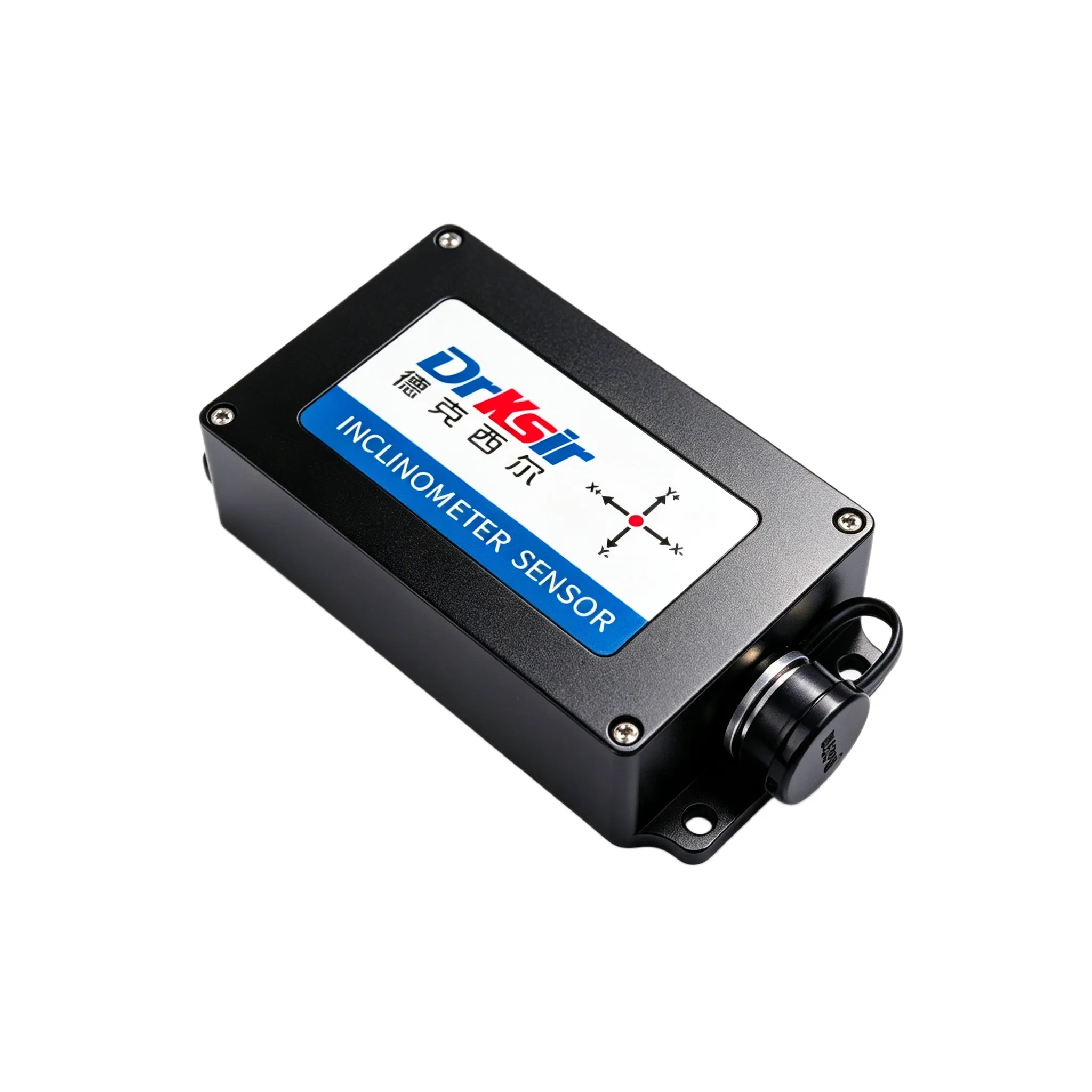
Drksir is a professional global industrial sensor manufacturer focusing on the R&D, production and customization of high-precision inclinometer sensors. The independently developed DK-INC series industrial inclinometer sensors have reached the international advanced level in terms of accuracy stability, environmental adaptability, and intelligent performance, and have become the preferred sensing solution for many global engineering contractors and system integrators.
4.1 Core Product Advantages
- Ultra-high measurement accuracy: Static accuracy up to ±0.005°, dynamic accuracy up to ±0.01°, ultra-low temperature drift design, stable data output all year round.
- Diversified communication protocols: Support RS485, Modbus, CANopen, LoRa, NB-IoT and other wired/wireless methods, compatible with global mainstream industrial control systems and cloud platforms.
- Industrial harsh environment resistance: IP68 full protection grade, wide temperature working range, strong anti-vibration and anti-electromagnetic interference ability, suitable for all kinds of complex global working conditions.
- Intelligent edge algorithm: Built-in data filtering and abnormal early warning logic, realizing automatic monitoring and intelligent judgment.
4.2 Global Service Capability
Drksir provides standardized industrial inclinometer sensors and one-stop customized sensor solutions for global customers. With stable supply chain, fast delivery cycle, and professional multilingual technical support, the DK-INC series has been widely exported to Europe, North America, Southeast Asia, the Middle East, and other regions, serving global infrastructure, new energy, industrial automation, and geotechnical monitoring projects.
5. Future Development Trends of Inclinometer Sensors
In the next five years, the global inclinometer sensor industry will continue to develop in the direction of higher precision, stronger intelligence, lower power consumption, and higher integration. With the continuous deepening of industrial digitalization and intelligent construction, the application penetration rate of intelligent tilt sensors in global infrastructure safety, new energy equipment, and intelligent manufacturing will continue to rise. At the same time, customized, modular, and IoT integrated sensor solutions will become the mainstream trend of market development.
Conclusion
As indispensable core sensing components in the global industrial field, inclinometer sensors play a vital role in engineering safety monitoring and intelligent equipment operation. With mature technology, stable quality, and global service capabilities, Drksir DK-INC series high-precision inclinometer sensors provide reliable, cost-effective, and professional tilt monitoring solutions for global industrial users, and continue to contribute to the digital and intelligent upgrading of global industrial engineering.