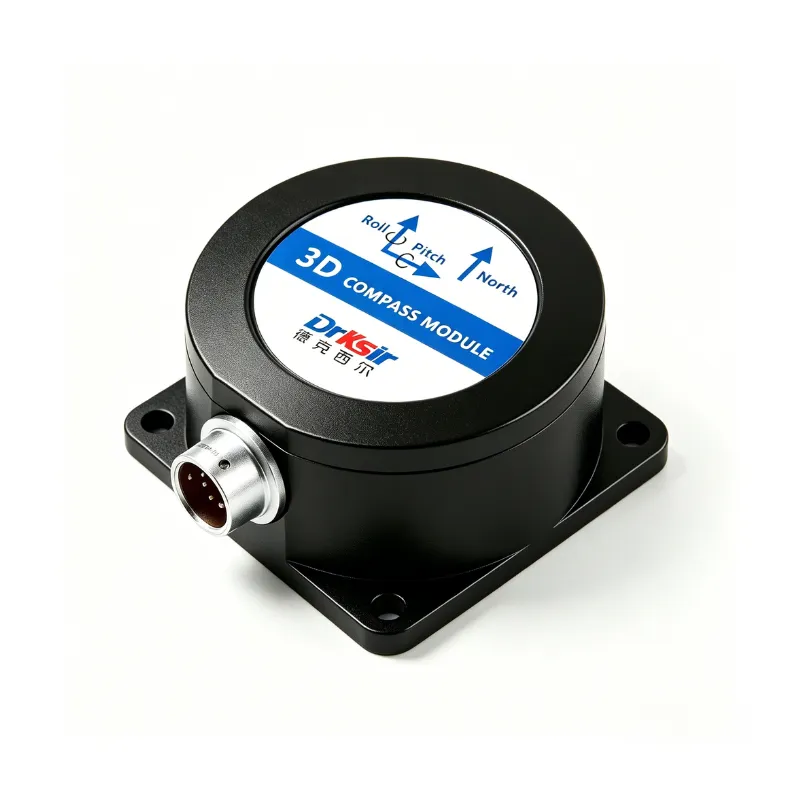
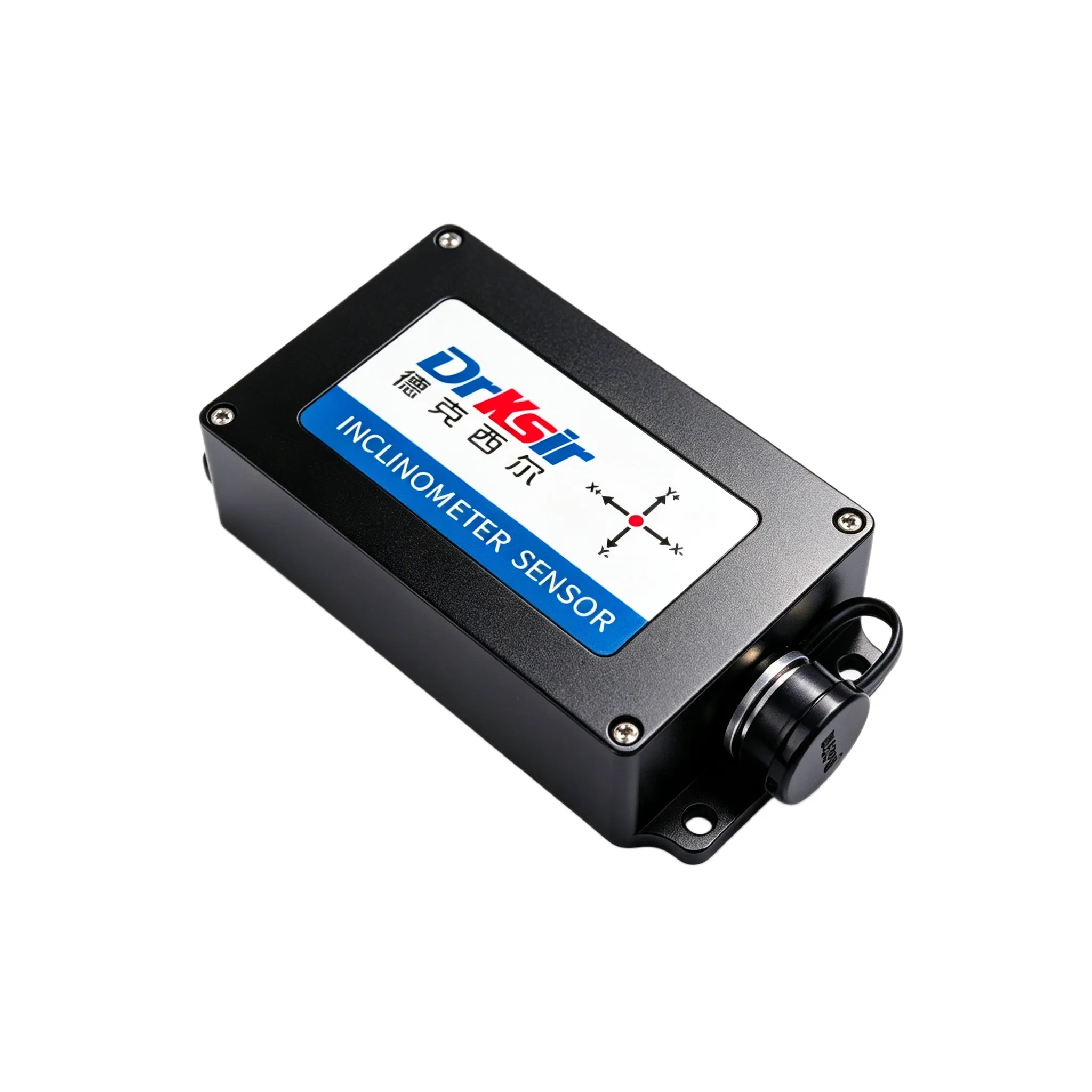
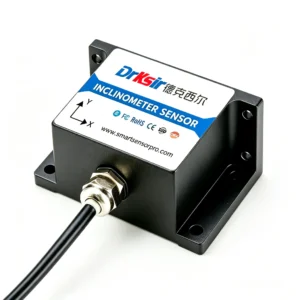
A triaxial accelerometer is a high-precision MEMS sensing device designed to measure linear acceleration, vibration, and motion attitude in three orthogonal axes (X, Y, Z). As a core component of industrial condition monitoring and intelligent control systems, the 3-axis accelerometer fully compensates for the single-direction detection limitation of dual-axis and single-axis sensors. It captures all-dimensional motion and vibration data, making it the preferred sensing solution for mechanical vibration detection, structural safety monitoring, and equipment fault early warning. Drksir industrial triaxial accelerometers support multiple output interfaces to adapt to diverse industrial scenarios, delivering stable, high-accuracy measurement data for industrial intelligent monitoring.
1. What Is a Triaxial Accelerometer?
A triaxial accelerometer refers to a MEMS-based inertial sensor that simultaneously detects acceleration changes in X, Y, and Z three spatial axes. Different from ordinary biaxial accelerometers, it can comprehensively capture complex motion states such as equipment vibration, tilt, impact, and attitude offset in three-dimensional space, without missing any subtle vibration signals.
Industrial-grade 3-axis accelerometers adopt advanced chip filtering and temperature compensation algorithms, which effectively eliminate environmental interference. With high resolution and stable output, they are widely used in harsh industrial environments, covering mechanical equipment monitoring, bridge structural detection, engineering machinery attitude control, and other fields.
2. Core Working Principle of Industrial Triaxial Accelerometer
The industrial MEMS triaxial accelerometer adopts micro-electromechanical sensing technology and integrates a high-performance 32-bit CPU processing chip. Its internal sensing unit induces tiny capacitance changes through mechanical vibration and acceleration displacement, and converts physical motion signals into standard electrical signals via algorithm processing.
During operation, the sensor collects real-time acceleration data of three axes, filters out high-frequency noise and environmental interference signals, and performs temperature compensation and error correction. Finally, it outputs stable and accurate acceleration values through different standardized interfaces. This working mechanism ensures that the industrial accelerometer maintains consistent measurement accuracy in extreme temperatures and complex electromagnetic environments.
3. Main Types of Triaxial Accelerometers (By Output Interface)
To match different industrial control systems and acquisition equipment, Drksir industrial triaxial accelerometers are divided into four mainstream types according to output interfaces, covering digital and analog signal output modes, with strong scene adaptability.
3.1 Modbus RTU RS485 Triaxial Accelerometer
The Modbus triaxial accelerometer is a digital output sensor based on standard Modbus RTU protocol. It features strong anti-interference capability and ultra-long transmission distance, which is suitable for industrial field bus networking and remote centralized monitoring. It supports multi-device parallel connection, convenient for intelligent system integration and large-scale industrial equipment cluster monitoring, and is the most widely used industrial vibration sensor in traditional industrial automation scenarios.
3.2 4-20mA Current Output Triaxial Accelerometer
This current-type triaxial accelerometer adopts industrial standard 4-20mA analog signal output. The current signal has no attenuation in long-distance transmission and strong anti-interference performance, which is perfectly compatible with traditional PLC, industrial acquisition modules and old-fashioned industrial control systems. It is an economical and reliable choice for industrial field transformation and conventional vibration monitoring projects.
3.3 Analog Voltage Output Triaxial Accelerometer
The voltage output triaxial accelerometer provides intuitive and stable analog voltage signals, with simple signal matching and low integration difficulty. It is mainly applicable to on-site display equipment, data acquisition cards and general industrial control systems, featuring high cost performance and convenient on-site debugging, suitable for conventional industrial motion and vibration detection scenarios.
3.4 CAN Bus Output Triaxial Accelerometer
The CAN triaxial accelerometer is a high-performance digital sensor with CAN Bus interface. It has fast communication speed, excellent real-time data transmission and ultra-strong anti-EMI interference ability. It is widely used in engineering machinery, automotive electronics, distributed industrial control and high-precision dynamic monitoring scenarios, meeting the high-speed and high-reliability data transmission requirements of intelligent equipment.
4. Key Features of High-Precision Industrial Triaxial Accelerometer
Different from consumer-grade accelerometers, industrial-grade triaxial accelerometers focus on stability, accuracy and environmental adaptability, with core advantages suitable for harsh industrial scenarios:
– High Measurement Accuracy: Adopts professional algorithm compensation, with accuracy up to ±0.01g and resolution of 0.001g, which can capture micro vibration and tiny acceleration changes accurately.
– Wide Temperature Adaptation: Supports -40℃ to +85℃ ultra-wide operating temperature range, maintaining stable measurement performance in high and low temperature extreme environments.
– Strong Environmental Resistance: Built-in anti-EMI design, effectively resisting electromagnetic interference in industrial sites; IP67/IP68 high protection grade, waterproof and dustproof, suitable for outdoor and harsh factory environments.
– Flexible Integration: Compact and integrated structure, easy to install and embed into various mechanical equipment and monitoring systems, supporting multiple output interfaces for free matching.
– Stable Data Output: Equipped with professional filtering algorithm to filter noise interference, ensuring continuous and stable output of vibration and acceleration data.
5. Industrial Application Scenarios of Triaxial Accelerometer
As a core MEMS accelerometer for industrial monitoring, the triaxial accelerometer is widely used in equipment condition monitoring, structural safety detection and intelligent attitude control fields:
– Mechanical Vibration Monitoring: Real-time vibration detection of engineering machinery, machine tools, gearboxes and fans, realizing equipment fault early warning and predictive maintenance.
– Structural Safety Monitoring: Long-term monitoring of vibration and attitude changes of bridges, wind turbine towers, buildings and hydraulic structures to ensure structural operation safety.
– Industrial Intelligent Control: Attitude feedback and motion calibration of automated production equipment, intelligent robots and transportation equipment.
– Harsh Environment Monitoring: Vibration and impact detection of outdoor industrial equipment, mining machinery and chemical industry equipment.
6. How to Choose a Suitable Industrial Triaxial Accelerometer?
When selecting an industrial 3-axis accelerometer, users should match the appropriate model according to actual scenario requirements: For traditional PLC and old industrial systems, choose 4-20mA current output or voltage output accelerometers; for remote networking and intelligent monitoring systems, select Modbus RS485 digital accelerometers; for high-speed real-time monitoring of engineering machinery and intelligent equipment, prioritize CAN Bus output high-performance accelerometers.
In addition, factors such as measurement range, accuracy, protection grade and temperature range should be comprehensively considered to ensure long-term stable operation of the sensor on site.
7. Conclusion
The triaxial accelerometer has become an indispensable core sensing device in industrial intelligent monitoring by virtue of its three-dimensional all-round detection capability, high precision and strong environmental adaptability. Multiple output interface types cover all industrial application scenarios, solving the matching problem of different industrial control and acquisition systems. Drksir industrial MEMS triaxial accelerometers adhere to high-standard industrial design, providing reliable, high-precision and cost-effective vibration and motion monitoring solutions for global industrial users.