Description
Product Overview
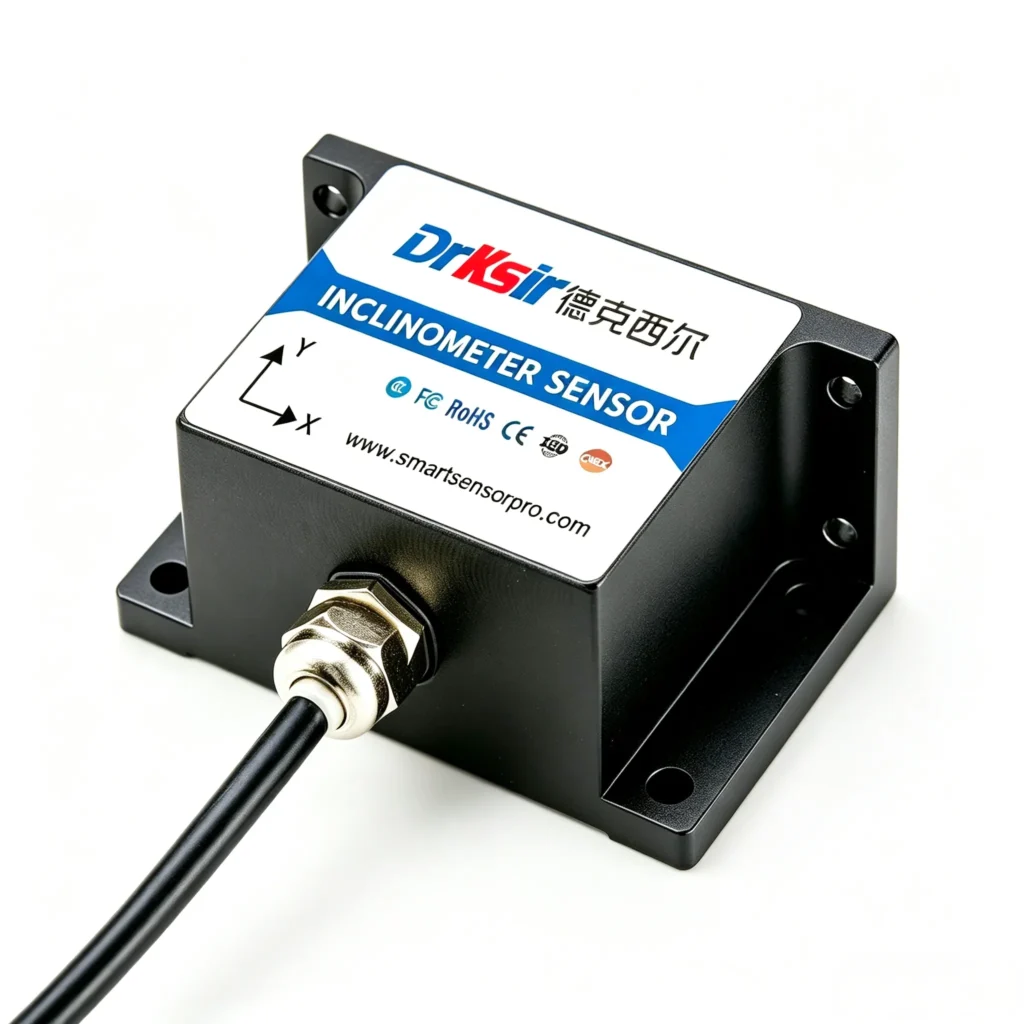
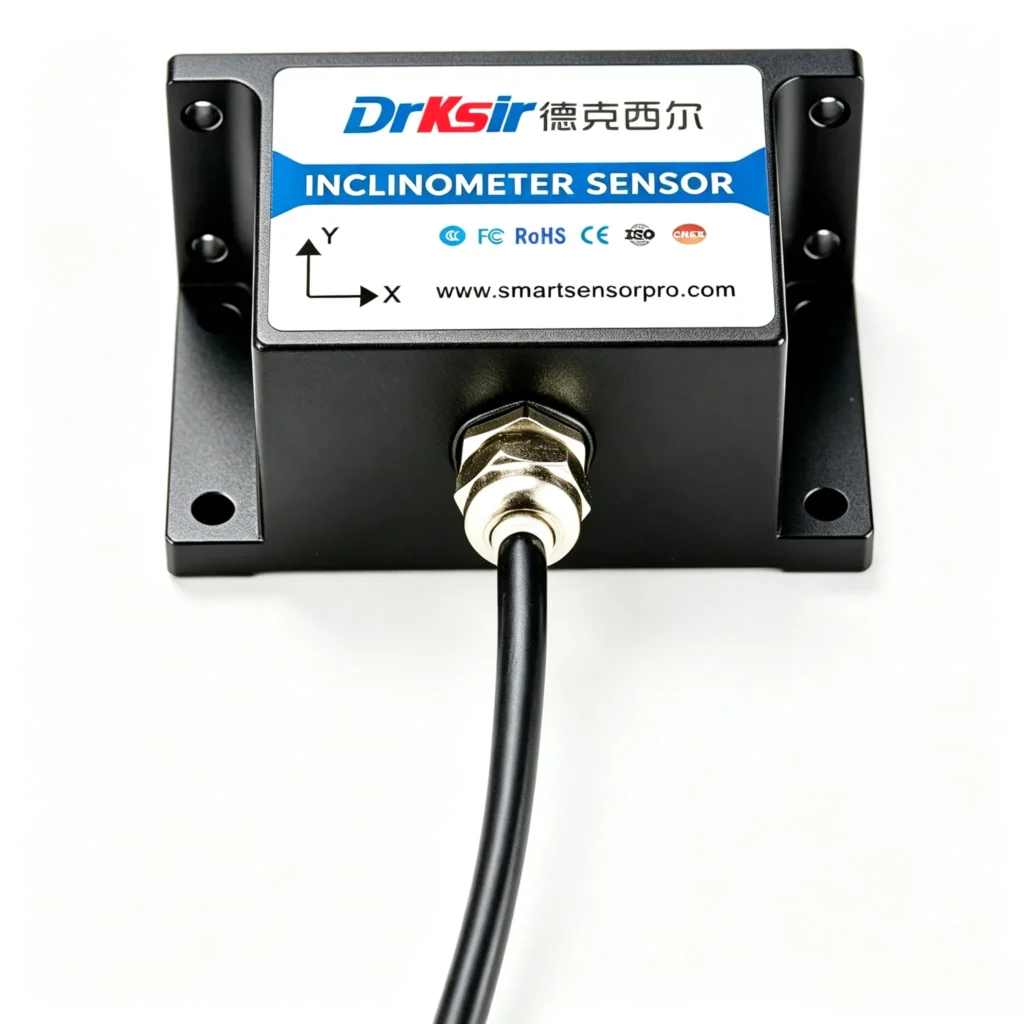
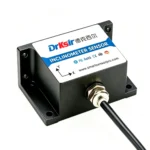
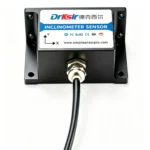
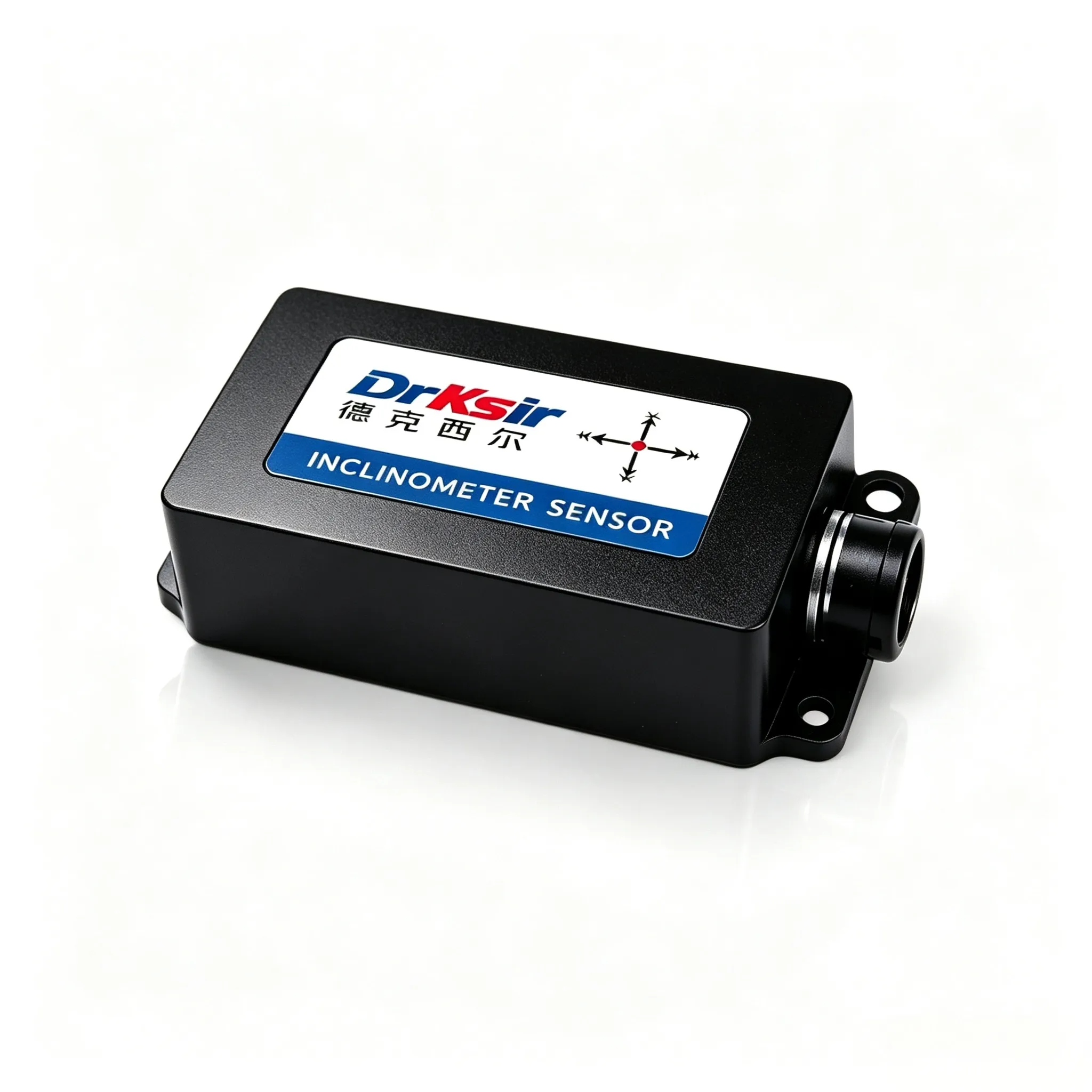
The DK-INC-700IS is a professional MEMS inclinometer designed exclusively for hazardous and explosive industrial environments, certified to the Ex ib IIC T6 Gb intrinsic safety standard. Adopting high-precision capacitive micro-pendulum sensing technology, every unit undergoes full-temperature calibration and long-term stability aging tests before delivery, ensuring drift-free and consistent angle measurement across extreme high and low temperature conditions.
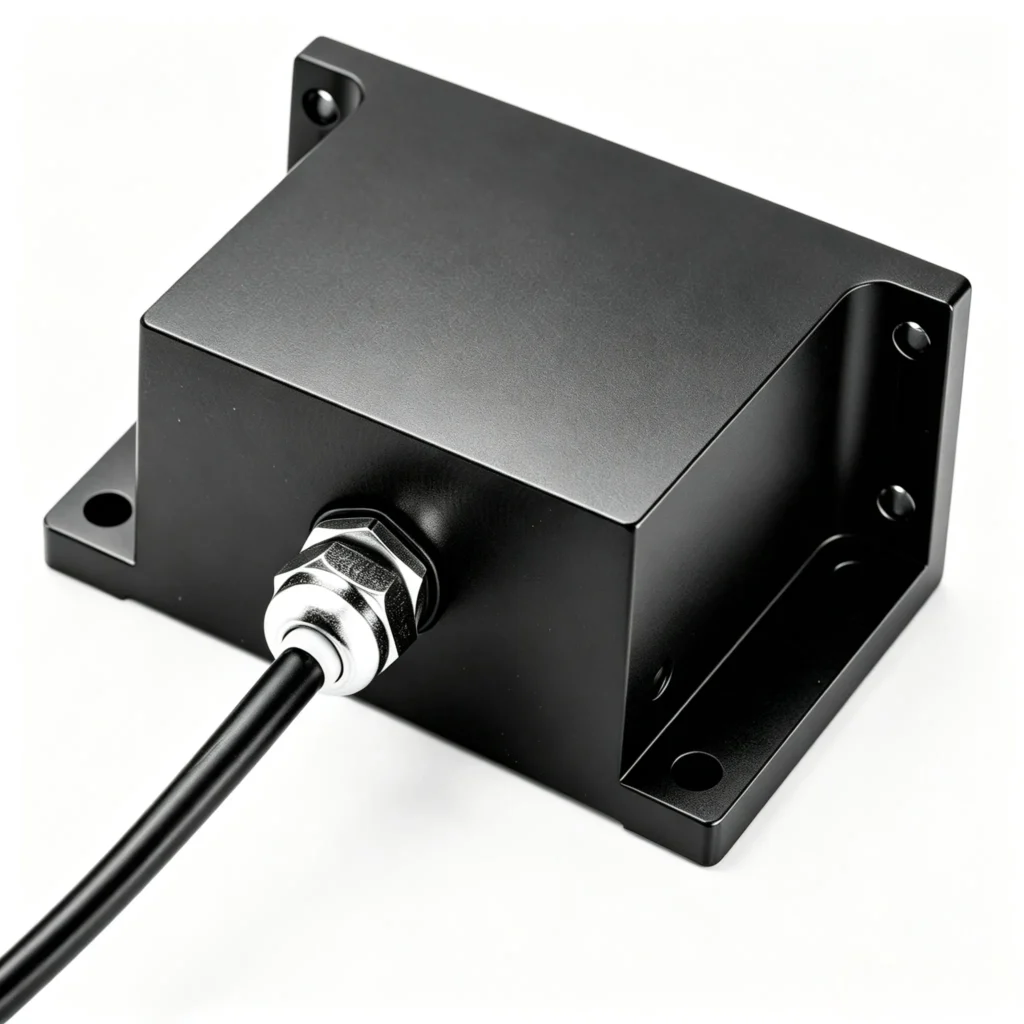
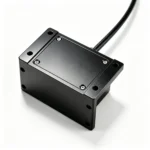
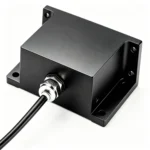
This sensor supports standard Modbus RTU digital communication with multiple optional interfaces, including RS485, RS232, TTL, RS422 and CAN. It features a wide DC 9–36V operating voltage and a compact matte oxidized aluminum housing with IP67 dustproof and waterproof protection. With excellent shock resistance, vibration resistance and EMC anti-interference capability, it can be seamlessly integrated with PLCs, SCADA systems and industrial data acquisition platforms, supported by dedicated PC debugging software for simple on-site configuration.
Capable of real-time X/Y dual-axis tilt measurement, the sensor supports customizable zero-point calibration and flexible communication parameter adjustment. It is widely deployed for safety tilt monitoring in chemical plants, underground mines, wind farms, bridge structures, construction machinery and power transmission towers.
Core Competitive Advantages
1. Complete Intrinsic Safety Certification for Hazardous Zone Deployment
Featuring Ex ib IIC T6 Gb intrinsic safety rating, this inclinometer complies with global explosion-proof standards and is safely applicable for Zone 0/1/2 explosive gas environments. It holds full international certifications including ISO9001, CE, FCC and RoHS. Each unit has passed rigorous environmental tests covering extreme high/low temperatures, rain immersion, dust exposure, continuous vibration and high-impact shock, ensuring reliable operation in harsh industrial sites.
2. Multi-Grade Precision & Superior Full-Temperature Stability
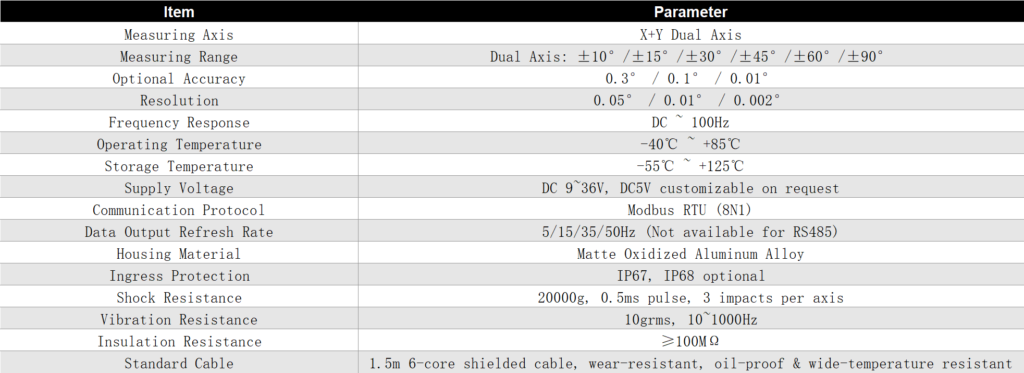
Three precision grades are optional: 0.3°, 0.1° and ultra-high 0.01°, with a maximum resolution up to 0.002°. The working temperature ranges from -40℃ to +85℃ with ultra-low zero-point thermal drift, effectively minimizing long-term angular deviation and delivering stable and accurate measurement in extreme hot and cold outdoor environments.
3. Customizable Measuring Ranges & Dual/Single-Axis Options
Dual-axis measuring ranges cover ±10°, ±15°, ±30°, ±45°, ±60° and ±90°. The single-axis version supports ±180° full-circle measurement (0–360°), fully meeting monitoring requirements for both micro inclination and large-angle swing displacement across diverse industrial scenarios.
4. Standard Modbus RTU Output for Easy Multi-Sensor Networking
Equipped with native industrial Modbus RTU protocol, the sensor defaults to a 9600bps baud rate and supports adjustable rates from 2400bps to 115200bps. Multiple sensors can operate on a single RS485 bus with independent slave addresses, greatly simplifying the construction of large-scale distributed monitoring systems.
5. Heavy-Duty Industrial Structure for Extended Service Life
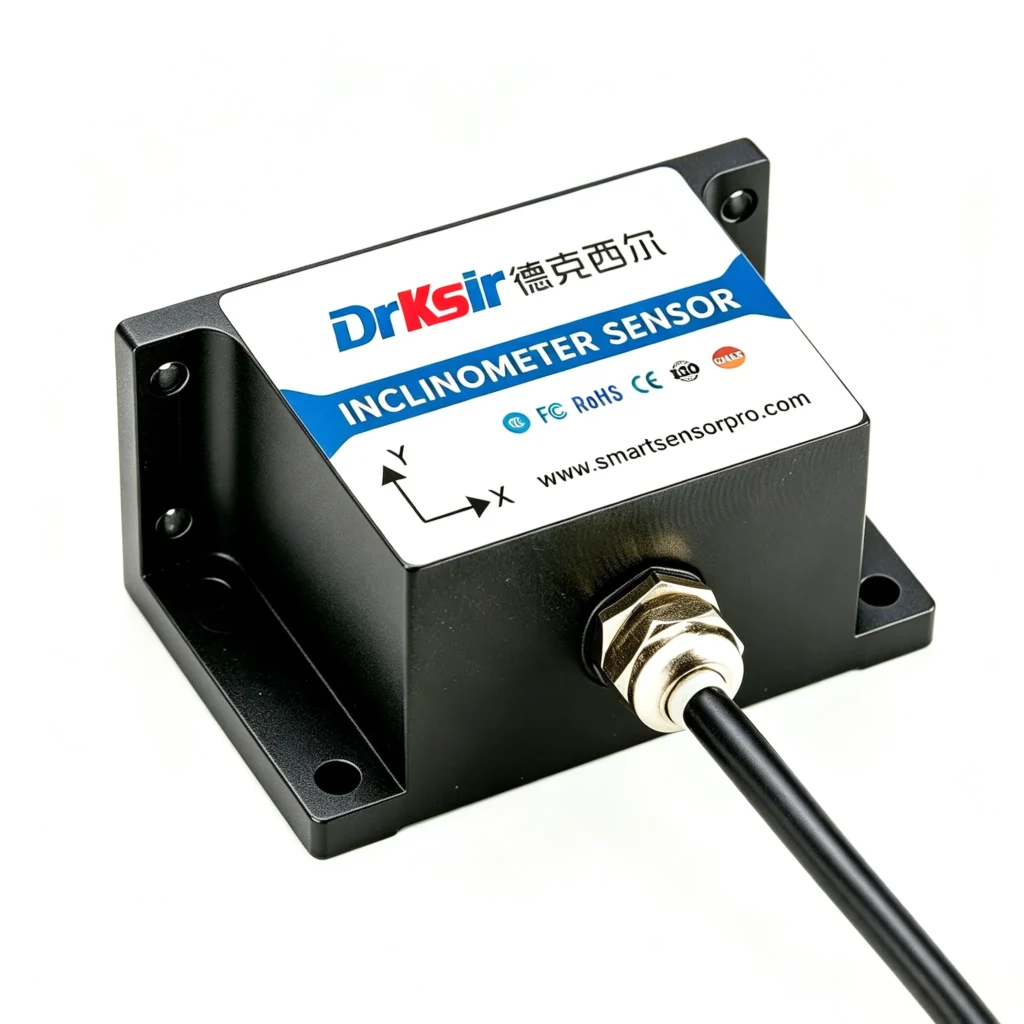
Built with a matte oxidized aluminum alloy housing, the sensor features IP67 waterproof and dustproof performance (IP68 optional). It withstands extreme mechanical impacts of 20000g (0.5ms pulse, 3 shocks per axis) and continuous vibration of 10grms within 10~1000Hz. The MTBF exceeds 55,000 working hours, and a 1.5m oil-resistant, wide-temperature shielded cable is equipped as standard to ensure stable long-term signal transmission.
6. Flexible Customization & Effortless Secondary Development
Users can freely switch between absolute zero and relative zero modes with one-click on-site calibration. The baud rate and slave address are fully adjustable, and all customized parameters can be permanently saved to the built-in flash memory without loss after power cycling. We provide free official PC debugging tools and standard CRC16 source code to accelerate customer secondary development and system integration.
7. Excellent EMC Performance for Stable On-Site Operation
The built-in multi-dimensional anti-interference design effectively resists surge pulses, RF radiation, power frequency magnetic fields and voltage fluctuations. The sensor maintains stable and loss-free data output even in complex electromagnetic environments near inverters, high-power motors and other industrial equipment.
Technical Specifications
Application Fields
Hazardous Chemical & Explosion-Prone Industries
Suitable for tilt monitoring in oil refineries, chemical production workshops, LNG storage terminals, underground mining equipment and flammable solvent manufacturing plants.
Civil Infrastructure Structural Monitoring
Ideal for bridge deflection tracking, dam displacement monitoring, tunnel structural safety inspection, high-voltage transmission towers, communication masts and railway track flatness calibration.
New Energy & Offshore Marine Equipment
Widely used for wind turbine tower sway and attitude monitoring, ship pitch & roll detection, offshore platform safety monitoring and solar tracking antenna leveling systems.
Construction Machinery & Precision Industrial Equipment
Applicable for angle feedback of cranes, excavators and pile drivers, horizontal calibration of precision machine tools, and tilt detection of industrial robots and high-precision industrial equipment.
Installation Guidelines
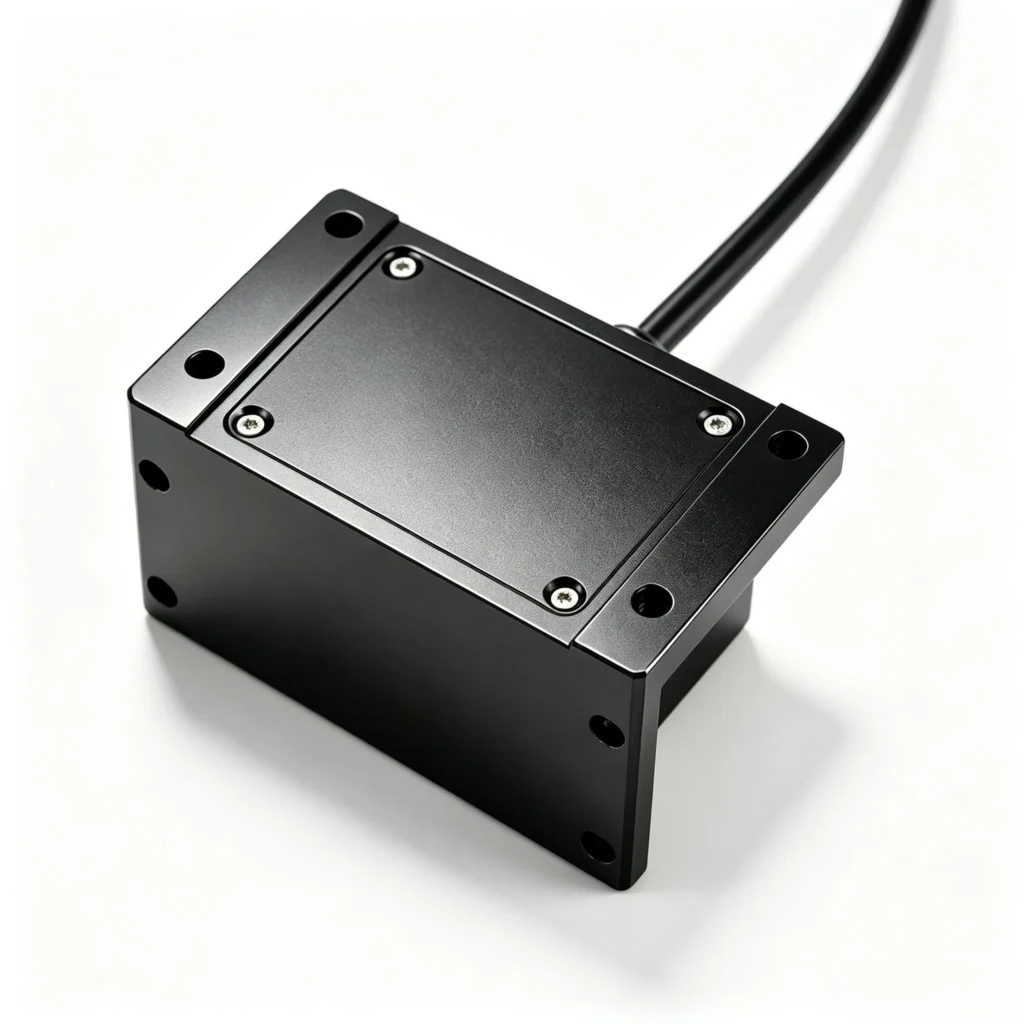
1. Ensure the mounting surface is flat and fully fitted with the sensor base. Uneven surfaces will cause permanent measurement offset errors.
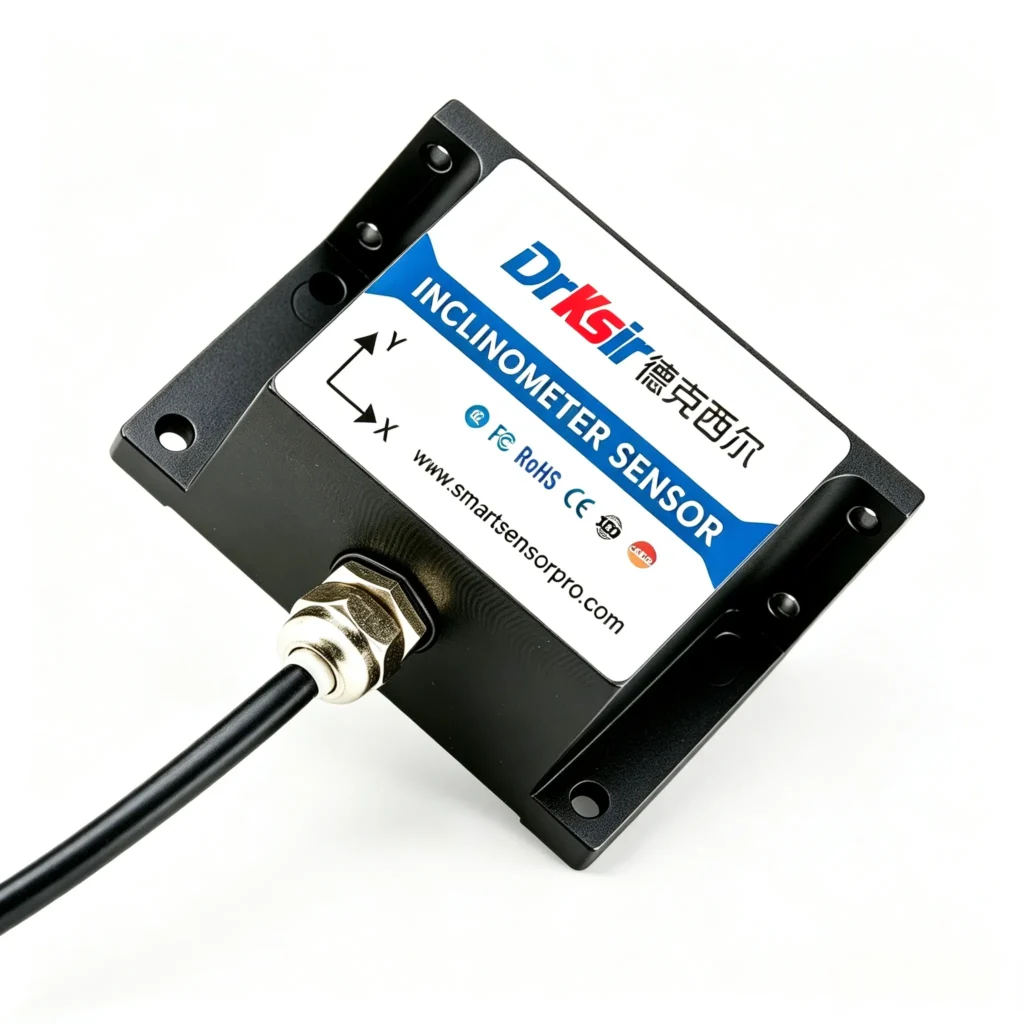
2. Align the X/Y marked axes of the sensor parallel to the monitoring direction of the target equipment to avoid cross-axis interference errors.
3. The default installation is horizontal upward. Please inform our team in advance if vertical side mounting is required.
4. Separate signal cables from high-power cables. Single-end grounding of the cable shield is recommended to reduce electromagnetic interference.
Modbus RTU Communication Features
Fully compliant with standard Modbus RTU protocol, the sensor supports all core industrial functions:
1. Real-time reading of X-axis, Y-axis and dual-axis synchronized tilt angles with high-precision IEEE754 floating-point data output;
2. Support absolute/relative zero-point setting and query, with one-click on-site zero calibration;
3. Adjustable device baud rate and slave address to support multi-sensor bus networking;
4. Support factory reset and permanent storage of user-defined parameters;
5. Keep a minimum 10ms communication interval to ensure stable data transmission.
We provide professional PC debugging software for real-time data viewing and logging, as well as complete development source codes to facilitate customer system integration.