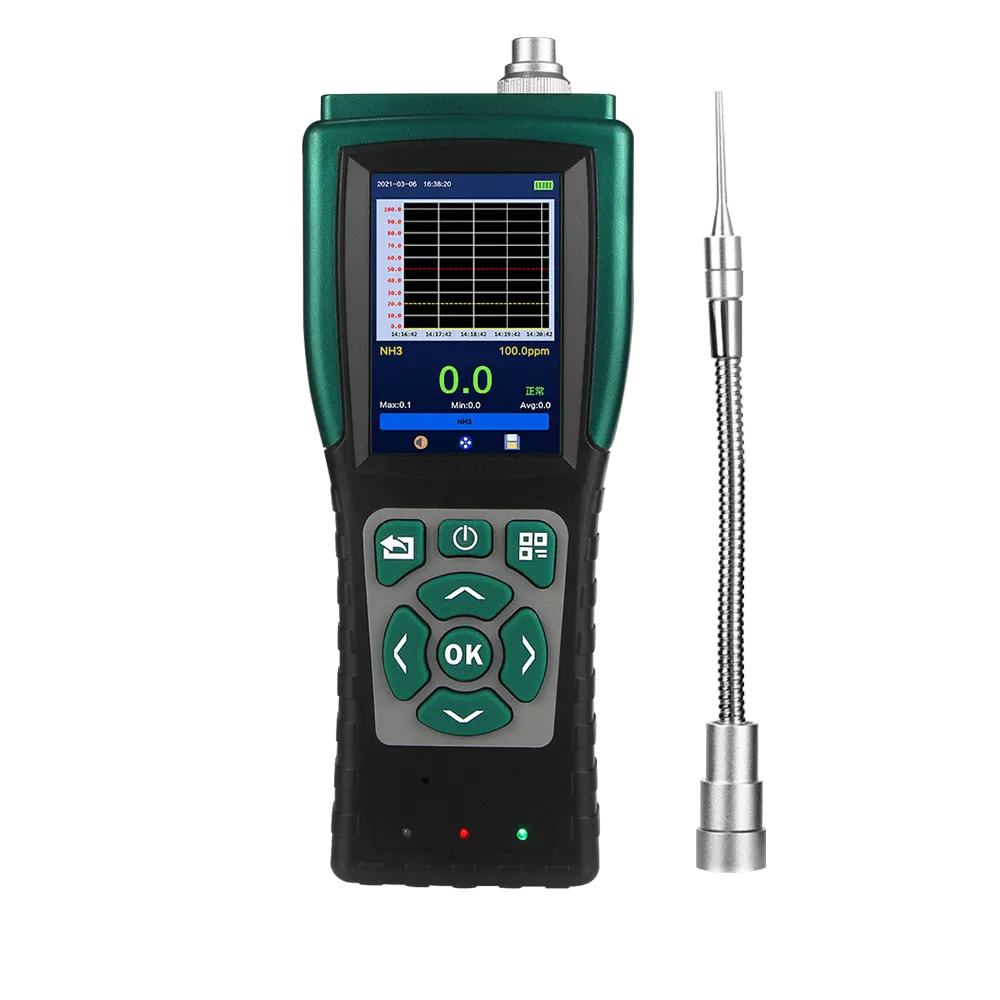
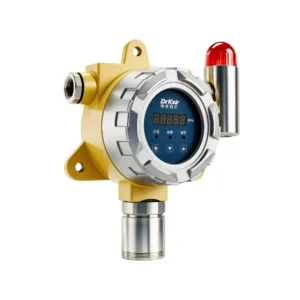
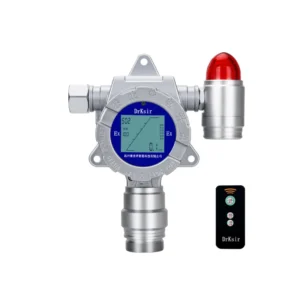
Hydrogen is a mainstream clean energy carrier, yet its wide flammable range creates severe explosion hazards across hydrogen refueling stations, energy storage facilities and lithium battery production lines. A fixed hydrogen concentration detector delivers round-the-clock continuous gas monitoring to eliminate hidden leakage risks. As a trusted industrial monitoring solution from DrKSir, our explosion-proof fixed hydrogen monitor solves common pain points of generic gas detectors and provides stable long-term leakage early warning for high-risk hydrogen environments. This guide covers working principles, core performance advantages, installation standards, maintenance rules and typical industrial applications to help facility managers select reliable hydrogen safety equipment.
1. What Is a Fixed Hydrogen Concentration Detector & What Makes DrKSir’s Monitor Stand Out
Fixed hydrogen detectors are wall-mounted monitoring devices running 24/7, tracking real-time hydrogen concentration and triggering automatic alarms once gas levels exceed safety limits. Unlike portable handheld detectors for temporary spot checks, fixed units offer permanent protection for hazardous zones with persistent hydrogen exposure.
Many low-cost generic detectors suffer from slow response, large measurement error or poor environmental adaptability. Our industrial hydrogen monitor adopts proprietary nano quantum sensing technology, full explosion-proof certification and multi-signal industrial compatibility, addressing the core defects of traditional detection equipment and becoming a preferred choice for long-term industrial hydrogen safety monitoring.
2. Core Working Principle: Proprietary Nano Quantum Sensing Module
The core competitive advantage of our industrial hydrogen detector lies in self-developed nano quantum sensing technology, which distinguishes it from ordinary gas monitoring devices:
1. Nano-structured sensitive materials selectively react with hydrogen molecules, converting gas concentration changes into stable electrical signals
2. Ultra-fast response ≤6s and recovery ≤8s, capturing micro leaks far before hydrogen hits explosive concentration thresholds (4%–75% volume ratio in air)
3. Ultra-fine 1ppm resolution with overall accuracy ≤3%FS, effectively reducing false alarms caused by temperature drift or mixed interfering gases
4. Optimized circuit anti-interference design delivers stable readings under strong electromagnetic interference from inverters, welding equipment and large power machinery
3. Standout Key Features of DrKSir Industrial Fixed Hydrogen Monitor
3.1 Full Explosion-Proof & IP66 Heavy-Duty Industrial Housing
This hydrogen monitor carries official Ex db Ⅱ C T6 Gb flameproof certification, fully compliant with GB/T 3836 explosion-proof standards for Class II C hydrogen hazardous areas. Its IP66 dustproof and waterproof aluminum housing runs reliably in -20℃ ~ 60℃ temperature and ≤95%RH non-condensing humidity, suitable for outdoor hydrogen stations and humid chemical workshops without extra protective shelters.
3.2 Four Universal Industrial Signal Outputs for Seamless System Integration
No need to replace existing control hardware when upgrading monitoring systems. The unit supports four mainstream signal formats in one device:
– Standard RS485 Modbus RTU for PLC, DCS and cloud monitoring platforms
– Optional 4~20mA analog current output
– Optional 0~10V voltage output
– Passive relay contact output for on-site sound-light alarm linkage
3.3 Three Flexible Installation Modes for All Site Layouts
The monitor supports wall mount, pipe clamp mount and bracket mount, adapting to flat walls, hydrogen pipelines and outdoor equipment racks. As hydrogen is lighter than air, install the unit 0.3~0.6m below ceilings with the sensing head facing downward for optimal gas capture.
3.4 Local Visual Monitoring & One-Key Simplified Operation
Built-in LED digital screen displays real-time hydrogen ppm readings onsite without controller access. Three color LED indicators separate working states clearly: green for normal operation, yellow for equipment faults, red for gas leakage alarms. Three multi-function physical keys support one-key self-test, alarm mute, address adjustment, baud rate configuration and automatic zero calibration, eliminating complicated remote setup tools.
3.5 Low Maintenance & Long Sensor Service Life
The equipment consumes only ≤1W power for low energy costs. Its hydrogen sensing element achieves a 2~3-year service lifespan under regular industrial conditions, requiring only annual professional calibration to maintain detection precision. The detachable sensing head design allows fast single-component replacement without returning the whole unit to the factory.
4. Professional Installation & Calibration Best Practices
Correct installation directly determines detection reliability, follow these standards for deployment:
1. Location Selection: Mount near potential leak points including valves, storage tanks and pipeline joints; sensor head must face downward
2. Wiring Specifications: Use ≥1mm²×4 shielded twisted pair cables; ground the detector shell firmly for explosion safety; separate signal wires from high-power frequency converter cables to avoid signal interference
3. Calibration Cycle: Perform full zero calibration every 12 months with standard hydrogen calibration gas; monthly visual inspection of LED indicators and quarterly wiring tightness checks are recommended
4. Operation Tips: Enter the zero calibration menu for automatic correction when the detector shows non-zero readings under clean air; use the self-test key to run full hardware inspection before restarting after long power-off periods
5. Core Industrial Application Scenarios
The explosion-proof, high-precision design fits all hydrogen-related high-risk industrial sites:
1. Hydrogen production plants & hydrogen refueling stations: Monitor pipeline and tank hydrogen leakage
2. Energy storage power stations & battery energy storage systems: Prevent thermal runaway induced hydrogen release
3. Lithium-ion battery manufacturing workshops: Detect hydrogen generated during cell formation processes
4. Petrochemical and fine chemical factories: Track hydrogen used in synthesis and refining
5. Laboratory hydrogen test stations: Small-space hydrogen safety monitoring
6. New energy vehicle assembly workshops: Fuel cell vehicle production line safety control
7. Aerospace hydrogen storage workshops: Strict hazardous area gas monitoring
6. How to Choose a Qualified Fixed Hydrogen Detector
When sourcing industrial hydrogen monitoring equipment, evaluate four core criteria:
1. Measuring range: Standard 0~40000ppm; custom 0~1000ppm narrow range available on request
2. Safety certification: Mandatory Ex db Ⅱ C T6 Gb flameproof and IP66 protection
3. Signal compatibility: Confirm support for your factory’s control system; mainstream RS485, analog voltage/current and relay signals are all available
4. Maintenance cost: Prioritize long sensor life and easy calibration to cut annual labor and replacement costs
Compared with generic low-cost hydrogen detectors, DrKSir’s industrial hydrogen monitor balances high detection accuracy, full explosion safety and flexible system compatibility, delivering long-term stable monitoring with fewer false alarms and lower overall operation expenses.
Conclusion
Fixed hydrogen concentration detectors are non-negotiable safety infrastructure for all hydrogen energy and chemical manufacturing facilities. DrKSir’s industrial hydrogen monitoring equipment integrates proprietary nano quantum sensing technology, full explosion-proof certification, multi-signal output and user-friendly operation, solving the core pain points of traditional gas monitoring equipment.
Whether you operate a hydrogen refueling station, energy storage power station or lithium battery workshop, our explosion-proof hydrogen detector provides 24/7 reliable hydrogen leakage early warning to protect staff, production equipment and factory assets from hydrogen explosion risks. Contact our team for customized range, signal output and installation accessory solutions tailored to your industrial project.