Drksir DK-INC Inclinometer Sensors for Long-Span River-Crossing Bridge Health Monitoring
This project implements full-life-cycle structural health monitoring for a heavily...
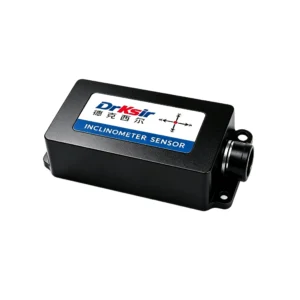
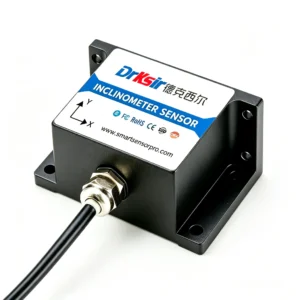
Industrial inclinometer sensors are key high-precision devices for attitude monitoring and structural safety early warning in industrial automation, infrastructure and intelligent equipment. Based on MEMS technology, they convert tiny tilt changes into digital signals with high accuracy and stability.
Drksir’s DK‑INC series features self-developed temperature compensation and noise reduction, delivering ultra‑low drift, strong anti‑interference and wide environmental adaptability. With multiple output interfaces and flexible installation, they are widely used in bridge monitoring, engineering machinery, new energy and cultural relic protection.
The industry is moving toward multi‑sensor fusion, edge AI and low power consumption. As a professional global supplier, Drksir offers static/dynamic models, full customization, industrial‑grade durability and plug‑and‑play convenience, providing reliable tilt sensing solutions for global industrial customers.
Drksir Sensing is a professional manufacturer integrating R&D, production and sales of MEMS inclinometer and accelerometer sensors. With standardized production, independent algorithms and strict quality control, it ensures stable performance and fast delivery.
Its full product line includes high-precision inclinometers and accelerometers supporting multiple interfaces, suitable for infrastructure, machinery, new energy and industrial automation.
Key selection criteria cover accuracy, stability, environmental adaptability and protocol compatibility. Drksir offers customized solutions, strong anti-interference design and global supply capacity.
As a reliable global supplier, it provides one-stop sensing solutions with stable quality, fast delivery and professional technical support for engineering and industrial projects worldwide.

Introduction In coal mining, metallurgy, building materials, and bulk material processing industries, scraper conveyors serve as the core continuous conveying equipment. They undertake long-distance, high-load, and uninterrupted material transportation tasks, and their operational stability directly determines the overall production efficiency of the entire factory and mine production line. However, affected by harsh working conditions such […]

What is a Broken Chain Protector? The Broken Chain Protector (DK-SCD Series) is an industrial safety device designed to monitor chain operation in conveyors, elevators, and material handling equipment. It detects abnormal chain speed, breakage, and slippage in real time, triggering an immediate alarm or emergency stop to prevent equipment damage and production downtime. Drksir’s […]
A triaxial accelerometer is a high-precision MEMS sensing device designed to measure linear acceleration, vibration, and motion attitude in three orthogonal axes (X, Y, Z). As a core component of industrial condition monitoring and intelligent control systems, the 3-axis accelerometer fully compensates for the single-direction detection limitation of dual-axis and single-axis sensors. It captures all-dimensional […]
The global inclinometer sensor market is experiencing steady growth, expected to hit $3.59 billion by 2026, fueled by rising demands for structural health monitoring, renewable energy optimization and industrial automation. MEMS inclinometer sensors currently dominate the industrial sector, evolving toward higher precision, wireless IoT connectivity, edge AI processing and rugged environmental adaptability.
Widely deployed in infrastructure safety, new energy systems, engineering machinery and smart manufacturing, these sensors ensure stable, accurate and real-time tilt monitoring. The global market features diversified competition among international brands, with Chinese manufacturers gaining increasing recognition.
Drksir’s DK-INC series delivers industrial-grade accuracy, multi-protocol compatibility and strong anti-interference performance with reliable global supply and customized services. Moving forward, the industry will trend toward higher intelligence, lower power consumption and integrated IoT sensing solutions for global industrial digital upgrading.
This article summarizes critical application specifications for industrial MEMS inclination sensors widely applied in infrastructure health monitoring, mechanical attitude control and new energy monitoring. Most common on-site issues including data drift, signal jitter and inaccurate early warnings result from non-standard usage instead of sensor quality faults.
It specifies standardized operation procedures covering scenario-adaptive model selection, professional installation and accurate zero calibration. Standard shielded wiring effectively avoids electromagnetic interference, while intelligent temperature compensation restrains temperature drift.
Matching filter parameters for static or dynamic scenarios and conducting regular maintenance further stabilize monitoring performance. Full-process standardized operations fully exert sensor precision, delivering stable, reliable and high-accuracy data support for industrial equipment and infrastructure safety monitoring systems.
Introduction In coal mining, metallurgy, building materials, and bulk material processing industries, scraper conveyors serve as the core continuous conveying equipment. They undertake long-distance, high-load, and uninterrupted material transportation tasks, and their operational stability directly determines the overall production efficiency of the entire factory and mine production line. However, affected by harsh working conditions such […]
What is a Broken Chain Protector? The Broken Chain Protector (DK-SCD Series) is an industrial safety device designed to monitor chain operation in conveyors, elevators, and material handling equipment. It detects abnormal chain speed, breakage, and slippage in real time, triggering an immediate alarm or emergency stop to prevent equipment damage and production downtime. Drksir’s […]
A triaxial accelerometer is a high-precision MEMS sensing device designed to measure linear acceleration, vibration, and motion attitude in three orthogonal axes (X, Y, Z). As a core component of industrial condition monitoring and intelligent control systems, the 3-axis accelerometer fully compensates for the single-direction detection limitation of dual-axis and single-axis sensors. It captures all-dimensional […]